How to Write Great Sentences: A Break From the Rules of Grammar

87
More Wordsmiths
- Wordsmith.org
The Magic of Words - Kenny Wordsmith
Hubber Extraordinaire - Wordsmith Extraordinaire
No idea who she is, but a cool name for a blog.
Grammar: Rules or Tools?
I was raised in and around the construction business, and if I learned anything it was that a fine craftsman knows the rules of his trade, but a master craftsman knows the tools of his trade.
Almost any trained carpenter can make precise measurements and cuts and produce a good product. However, it is most often the less precise, but more skilled carpenter whose work is truly a thing of beauty. Give me someone who can eyeball a near 45 degree angle over someone who will measure out a 43.87 degree angle anyday, and we can compare results.
The same is true of the wordsmith. When a writer learns that the rules of his or her trade are actually the tools of his or her trade, then and only then can a good writer become an exceptional writer.
Grammar Help.
- Robin's Grammar Guide
A List of Excellent Hubs on Grammar. - The Indexer's Grammar Hubs
Another Wonderful Compilation of Grammar-Related Hubs. - Hyper Grammar
The Writing Centre, University of Ottawa. - Guide to Grammar & Writing
A Guide to All Things Grammatical. - Grammar Slammer
Useful Site for Grammar Basics.
Fun Grammar Guides.
Basic Sentence Writing.
If the rules of grammar are the tools of the writer's trade, words and sentences are the materials. Sentence construction is key. Most writers will advise that sentences need to be simple, preferably short, and include one and only one thought or idea. Sage advice, but another tool, not rule.
I am, of course, assuming a basic understanding of the rules of grammar and sentence composition. If this assumption is incorrect, please visit the grammar and writing resources included in this hub.
Here are a few examples of how to use the rules as tools.
Rule: Short, Sweet, One Idea Per.
- Rule: My uncle was an excellent storyteller. He told ghost stories. They were so scary they kept us up all night long.
There is nothing technically wrong with these three sentences. They are short, sweet and contain one idea per. They follow all of the rules of grammar, but, rather than keep you up all night, they make you want to go to sleep. Here is an example of how to use this rule as a tool.
- Tool: My uncle was an excellent storyteller. His ghost stories were so scary they kept us up all night long.
Shorter and sweeter, although not exactly one idea per. The second sentence compounds two ideas into one. The grammar police will probably leave you alone, and the reader will be appreciative.
Rule: No Run-on Sentences.
- Rule: My uncle was an excellent storyteller who told ghost stories that were really scary and they kept us up all night long.
This is a run-on sentence, not pleasant to read. It is perfectly acceptable to communicate these thoughts in one sentence, but do so appropriately,
- Tool: My uncle, an excellent storyteller, told us ghost stories that were so scary they kept us up all night long.
All the ideas are included, the run-on sentence is avoided, and the reader is happy, running on his or her merry way.
Rule: Don't Begin a Sentence With "And".
- Rule: My uncle was an excellent storyteller, and he told ghost stories so scary they kept us up all night long.
Again, there is nothing wrong with this sentence. It is an appropriate use of the "and", but these sentences are a dime a dozen. A well-placed "and" can break the monotony and grab the attention of the reader.
- Tool: My uncle was an excellent teller of ghost stories. And they were so scary they kept us up all night long.
Nor is there anything wrong with these sentences. And the "and" provides the readers with a nice transition between thoughts.
Split Infinitive.
Writing Resources on HubPages.
- How To Edit Your Own Writing
My $0.02 on Editing. - Finding Your Writing Style, Finding Your Voice
amy jane's how to on letting your voice shine through. - On Writing: Composition and Control
Great Fiction Writing Advice. - The Writing Habit
Making a Habit of Instant Writing. - Six Tips for Publishing Success
Useful Tips for Getting Published
Rule: Don't Split Infinitives.
- Rule: My uncle was an excellent storyteller. As children, we anxiously awaited for him to dramatically tell his scary stories that kept us up all night long.
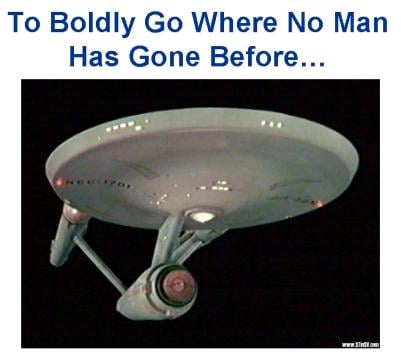
Such a dramatically split infinitive is frightening indeed, but without split infinitives the Star Trek Enterprise would not have boldly gone anywhere, it would have just gone. So, split infinitives aren't all bad.
- Tool: My uncle was an excellent storyteller. As children, we anxiously awaited the scary stories he told to (really, genuinely, intensely, truly, etc.) scare us. They kept us up all night long.
Admittedly, this is not the ideal construction, but, if you want or need to occasionally split an infinitive to really make your point, it can be an interesting oddity rather than an eyesore.
Rule: No Incomplete Sentences.
- Rule: My uncle was an excellent storyteller. He told us ghost stories that kept us up all night long. Because they were scary.
Quite right. This incomplete sentence is completely inappropriate. But, no incomplete sentences? Bunk!
- Tool: My uncle was an excellent storyteller. He told us ghost stories so scary they kept us up all night long. Seriously, all night long!
See? It is okay. Where a little extra emphasis is needed, add it (not the subject of this hub, dangling modifiers will be addressed later).
Warning!
Beware. The rules of grammar are the rules for good reason. It is very tempting to let the exceptions rule the rules. Do not.
without rules there is anarchy and everything would eventually end up like the email you read or txt msgs you get where nuthin is capitalized punctuated speled corektly and everything is abbv until there is nuthin left xcpt txt that makes no cents ;) LOL XOXO
However, when employed sparingly, and lovingly, even a little curiously, a little rule breaking can make your writing a whole lot better.
CommentsLoading...
Well, I am a bit of a spelling and grammar nazi...I love stuff like this :)
You might expect that somebody who spends much of his time correcting English grammar would object to what you are saying. However, in the main I agree with you. What I would stress is that the way you use language should reflect the purpose for which you are using it. One complaint I have about the way Americans use English is that too often it sounds as though it is being spoken, not written. "He said he was coming Friday" is OK as conversation, but as reported speech it should be "He said that he was coming on Friday". (This is on top of my British horror at such Americanisms as "meet with", "gotten" and "burglarise"!)
Grammar makes my head spin just a little, due to a traumatic schooling experience. I now feel compelled to break the rules on occasion. Childish rebellion!
Thanks, Peter, for the awesome hub. It's informative and entertaining, just like all sentences should be!
LOL amy jane:-)
I think I must have had a few of the same teachers as you did. At this point in my life and with my writing, I am trying to not get too hung up on the 'rules'. Although I respect greatly how they enable a reader to read that which we do write. This reality forces me into realizing that everything I write still, is as a student.
Thank you Peter. You have reminded me that I am always a student. I will look forward to your next lesson anxiously.
I have so much still to learn in this area, that my head is always spinning here on hubpages. (please don't grade this comment:-)
tDMg
LdsNana-AskMormon
This rule has been the writer's forever: You can break the rules only after you master them. I think the same may be true for carpenters and their apprentices.
Peter, you are an accomplished writer. It is obvious that you mastered the rules. so you are entitled to break them.
Well done!
Yes, our use of rules and words must draw the reader in...creating pictures...putting us "there." As readers we are participants in the story, event, lecture, tale. With good writers, we are the star in the story, we are relating or objecting...but we are there. Anxiously engaged.
Amen. Ever Onward, Marisue
Awesome hub. (rule #1) This is one hub I will be referring to over and over again. Thanks so much.
Peter! Excellent hub. Rules are made to be broken...thats my line and I'm sticking to that...regards Zsuzsy
Enjoyed your hub, Peter and learnt something, too, thanks. Except for that uncle and his scary stories! I shall need a lot of will power to remove him from my thoughts and ensure I don't dream of him! :D
Peter, this Hub is fantastic and I think I will greatly learn from it. Like you said. Breaking the rules is great sometimes but not all the time.
*posting like that on purpose.*
Great hub! You made it fun to review the basics.
Awesome hub, Peter! I'm hoping you're doing a series of these, because although I usually deny it, I'm getting older and forgetting some things that I used to know.
Bravo!
One of the first classes you take in J-School is grammar. You must pass this horrific experience with an A or you're D as in done. There are many rules indeed. Breaking a few can be plain ole' fun. No, I'm not saying no more! Ciao!
NICE HUB IN ENG GRAMMER
here is no importence to how you write and these gramer issues but importence is what you write and your view points.
Another great hub going directly to my bookmarks ;) . Thank you Peter!
Great hub!
This hub is perfect and just what the doctor ordered!!
Bookmarked, thumbed up and thanks.!
100% A++
:-) (going to my bookmarks too)
This is good but those are really general grammar rules you should follow, which make it a correct sentence, but that doesn't mean its a good sentence. I'm an editor in the publishing industry and an exjournalist and when people ask me how to write well, i tell them to use declarative language. I also give them this rule of thumb for creating good clear sentences - subject verb object.
Well thats my two cents, I also became a member of your fan club !
Thanks Peter (my friend:-)
I needed that!
tDMg
LdsNana-AskMormon
I love to think about words and grammar and how to acheive an effect with just the right words. It really is a matter of the 'ear' more than the 'eye'. A writer is closer to a musician than he is an artist, but really a good writer needs both to do truly captivating work. Great hub!
So we may Break the rules a little so long as we know we are and do it with the inten of enhancing a sentence.
I like it.
Your fan.
Mon.
Noodles Noodles Noodles. hehe. j/k
If your writing fiction, poetry, or prose -break em'. Nonfiction or research, no way!!!
There has never been a gooder hub than this won. Thanks!
Thanks Peter. Keep us updated as to when you join the "with child" club!
It's a good Hub... very productive and from this day onwards i will apply this rule that will make my writing easier
Just noticed the title you gave me. You are kind and gracious, Peter! :))
In response to Sally's Trove: This rule has been the writer's forever: You can break the rules only after you master them.
But what constitutes the "mastering" of anything? It is often hard to know when to consider breaking a rule (especially a hard and fast one) because you are unsure of your expertise. I say, in moderation of course, that you should go ahead and experiment. Not on your term paper or something really important, but give some of these things a try, and you just might find you have reached the "mastery" level and didn't even know it.
Peter, this Hub is fantastic
Let's face it: when you send your writing off in the hopes it will be published, every word is important. You wouldn't give yourself permission to get sloppy after page 37, assuming the editor can handle choppy prose or "inventive" spelling if she made it that far. But what you may not realize is that the beginning of your manuscript is by far the most important part because it will encourage an editor to read on or to toss the whole thing aside.
This is very helpful!
good deal, I like your rules. Thanks.
Thanks
Good hub .thanks...
Nice hub, please cover all the topics related to advance grammer.
Not really much help still stuck I am in primary 7 really needs help


Uninvited Writer Level 4 Commenter 4 years ago
Excellent hub and advice :) Thanks.